


It took me 18 months to fully commit to it.
I had a marketing agency generating £2M in revenue with 20 people on the team. We had loyal clients. Predictable income. A reputation we had built over three years from literally nothing. I started the agency at 23 with £50. By the time I was 26, we were doing real numbers.



And then, gradually, I killed it.
Over 18 months, I shifted energy away from client work and toward ContentCal, a software tool we had built internally to manage our own content workflows. At the time, ContentCal was a side project. A thing we made for ourselves because nothing else on the market worked the way we needed it to.
Looking back, I wish I had moved faster. I hesitated when I should have committed. Those 18 months of limbo were some of the hardest of my career, not because the work was difficult, but because I was straddling two worlds without fully committing to either.
People asked me constantly: why would you walk away from something that works?
The answer took me years to fully understand. But looking back, it was the most important decision I ever made.
The Agency Trap
Before the agency, I cut my teeth running social media for ODEON, the UK’s biggest cinema chain, and then NOW TV at Sky when they were just 40 people. That experience taught me everything about content, distribution, and what actually works in social media marketing. It also showed me there was a market for helping other companies figure this out.
That is where the agency came from. I took everything I had learned and started helping other brands do what I had done for ODEON and NOW TV.
Here is the uncomfortable truth about agencies: they are fundamentally linear businesses.
More clients means more revenue. But more revenue means more people. More people means more overhead. More overhead means you need more clients. The cycle never compounds. It just scales in a straight line, with you trapped in the middle managing the chaos.
I realised this after year two. We were growing, but I was exhausted. Every new client was a new fire to manage. Every month required fresh sales to replace the projects that ended. And no matter how much we grew, the business never seemed to get easier. It just got heavier.
The agency model is brilliant for learning. You work with dozens of different clients across different industries. You see what works and what does not. You develop pattern recognition that most founders never get because they are too deep in their own product. But as a wealth-building mechanism, it has a ceiling. And that ceiling is your own capacity to manage complexity.
I did not want to spend the next decade trading time for money, no matter how much money it was.
The Insight That Changed Everything
ContentCal started as a frustration.
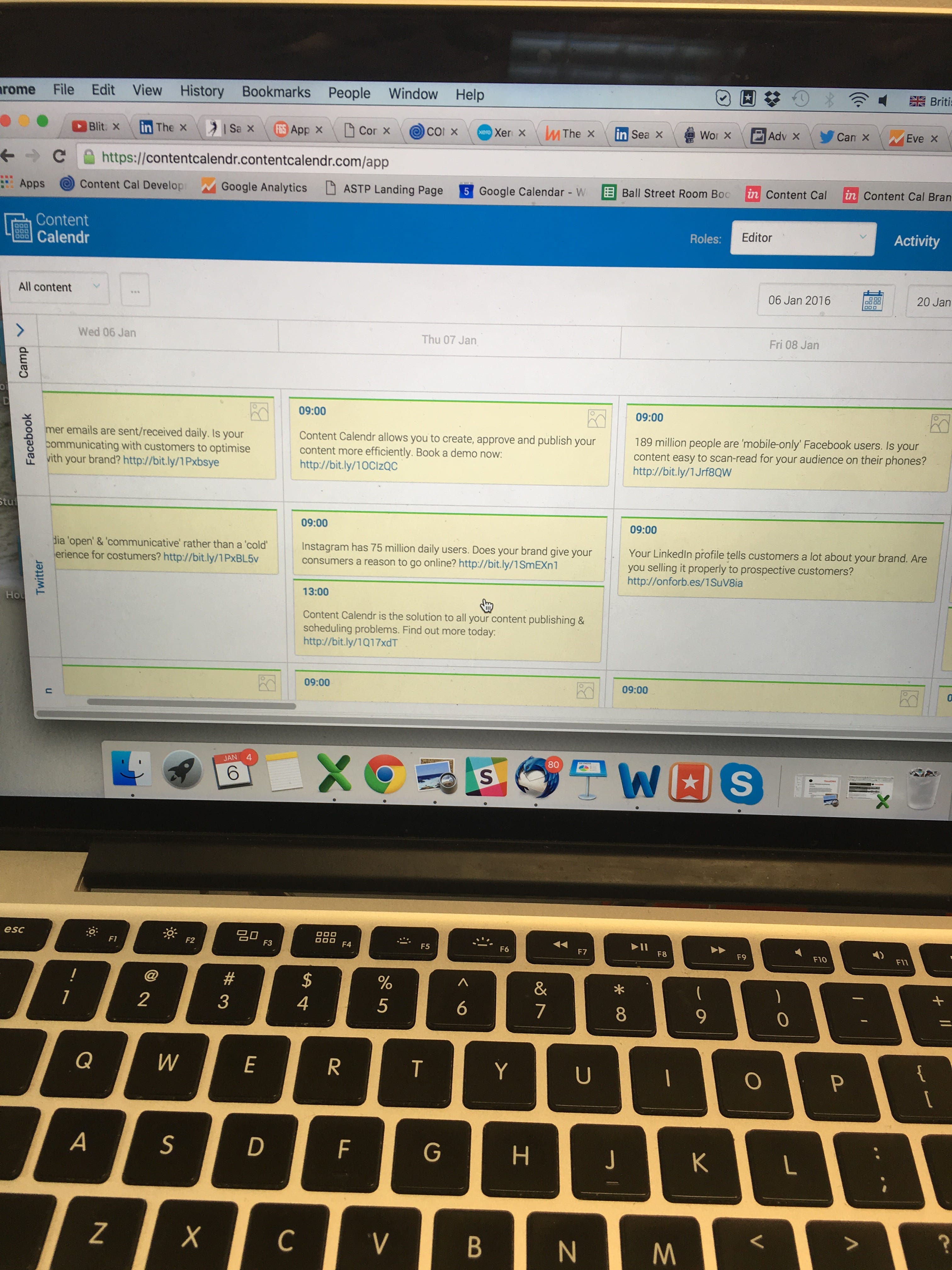
We were a marketing agency helping clients with social media and content. But our own internal processes were a mess. Spreadsheets. Slack threads. Approval chains held together with emails and hope. Every campaign felt like we were reinventing the wheel.
So we built something. A simple tool that let us plan content, collaborate with clients, and actually see what was going out and when. It was ugly at first. But it worked.
The surprising thing was not that it worked for us. The surprising thing was that our clients kept asking about it.
“What is this thing you are using?”
“Can we have access to it?”
“Could we use it for our own team?”
When you hear that enough times, a different thought starts to form. Maybe this side project is not a side project. Maybe this is the real opportunity.
The Pattern I Did Not See Until Later
I have since learned that this pattern, building an internal tool that becomes a product, is one of the most reliable paths to building genuinely valuable software companies.
37signals started as a web design agency in 1999. They built Basecamp because they needed a project management tool for their own client work. Their clients started asking what they were using. Within a year, Basecamp was generating more revenue than their consulting business. They shut down the agency and focused entirely on software. Jeff Bezos personally invested. The company became one of the most influential software businesses of the Web 2.0 era, and they created Ruby on Rails as a side effect, which went on to power thousands of startups including Shopify and Twitter.
Mailchimp has an almost identical origin story. Ben Chestnut and Dan Kurzius were running a web design agency called The Rocket Science Group in Atlanta. Their clients kept asking for help with email newsletters, but all the tools available were either too expensive or too complicated. So they built a simple email marketing tool as a side project. For five years, Mailchimp was secondary to their agency work. Then it started making real money. They eventually shut down the agency and focused entirely on Mailchimp. In 2021, Intuit acquired them for $12 billion. They never raised a single dollar of outside funding.
Shopify started because Tobias Lütke wanted to sell snowboards online. He was a programmer who had burned out on traditional software jobs and wanted to do something different. But every ecommerce platform he tried was terrible. So he built his own system using a new framework called Ruby on Rails. The snowboard store, called Snowdevil, had a decent season. But what stood out was how many other retailers kept asking about the technology behind it. Lütke realised he was more interested in helping other merchants than selling snowboards. He shelved Snowdevil and launched Shopify in 2006. Today it powers millions of online stores and has a market cap exceeding $100 billion.
The pattern is the same every time: agency or services work reveals a real problem. Internal tools solve that problem. Other people want access to those tools. The tools become more valuable than the original business.
Why Agencies Make Great Software Incubators
This is not a coincidence. Agencies are uniquely positioned to discover product opportunities for several reasons.
First, you see the same problems across many clients. When you work with one company, you might assume their challenges are unique to them. When you work with fifty companies and they all struggle with the same thing, you start to realise it is a market-wide gap.
Second, you already have distribution. Your clients become your first users, your first feedback loop, and your first paying customers. You do not have to cold-start demand. It already exists in your network.
Third, you have cash flow. Most software companies burn through capital trying to reach product-market fit. Agency founders can fund product development with client revenue. This is what we did. This is what 37signals did. This is what Mailchimp did. The agency subsidises the software until the software can stand on its own.
Fourth, you understand the workflow deeply. You are not guessing what users need. You have lived inside the problem for years. This insight is worth more than any amount of customer research.
The challenge is not identifying the opportunity. The challenge is having the courage to make the leap.
What Made Me Finally Commit
For 18 months, I operated in limbo. Running the agency. Building ContentCal on the side. Trying to do both without fully committing to either.
That is an exhausting way to live. And it caps the potential of both businesses. I wish I had made the decision faster. The hesitation cost me time and energy that I will never get back.
The moment I decided to go all in came down to one simple question: which path actually compounds?
If I kept the agency and grew it to £5M revenue, what would I have? A bigger version of the same machine. Still linear. Still dependent on my ability to manage people and projects. Still trading time for money.
If ContentCal worked, what would I have? Recurring revenue. Software that could scale without my direct involvement. Customers who pay monthly whether I am awake or asleep. A real asset that compounds over time.
The agency was certain money. But certainty without leverage is just a comfortable prison.
ContentCal was uncertain. We did not know if it would work. We did not know if anyone would pay for it. We did not know if we could compete in a market with well-funded incumbents. But if it worked, it would be transformational.
I decided I would rather bet on transformational than settle for incremental.
The Hardest Part Was Not Leaving
Walking away from £2M in revenue was scary. But the hardest part was actually the identity shift.
In agency land, I was the brain. The knowledge. The shiny person the team would roll out to clients. My value was being the expert who could solve problems, pitch ideas, and deliver results. That is how agencies work. The founder is often the product.
Software is completely different. At ContentCal, it was never me doing everything. But it took time for me to understand that I was no longer supposed to be the expert. I was a facilitator. A CEO. My job was not to be the smartest person in the room. My job was to hire people who were smarter than me at the things that mattered.
This is a tough thing to learn at 24 or 25 years old when you are still proving yourself. Your entire identity is wrapped up in being capable, being knowledgeable, being the person who has the answers. And then suddenly the job requires you to let go of all that and trust other people to be better than you.
That shift took longer than it should have. But once I understood it, everything changed. The company could scale because it was not dependent on my personal expertise. It was dependent on systems and people who were genuinely excellent at their specific functions.
The other hard part was the uncertainty. With agency work, you know what you are getting. Client pays, you deliver, you invoice. Software is different. You build something, launch it, and have no idea if anyone will care. The feedback loops are longer. The validation is slower. And you can go months working on something that might not work at all.
I had to get comfortable with not knowing. I had to learn to operate under constant ambiguity. That skill, by the way, turned out to be one of the most valuable things I ever developed.
What I Would Tell Someone Facing This Decision
If you are running an agency and you have built something internally that clients keep asking about, pay attention. That signal is rare and valuable.
Here is what I would consider:
First, do not kill the agency too early. Use it. Let client revenue fund product development. Let client problems inform product decisions. The agency is not the enemy of the software. It is the incubator.
Second, but when you know, when you are certain you want to make the shift, kill it fast. Or sell it. Do not do what I did and spend 18 months in limbo. That hesitation cost me. The straddling was harder than either path would have been on its own.
Third, be honest about what you actually want. Some people love agency work. They love the variety, the client relationships, the problem-solving. If that is you, there is nothing wrong with building a great agency. But if you feel trapped by the linear economics, if you want leverage, if you want to build something that compounds, then software might be the path.
Fourth, understand that the leap itself is the strategy. You cannot hedge forever. At some point, you have to commit. Every great software company born from an agency reached a moment where the founders decided to go all in. That decision is not reckless. It is the prerequisite.
What Happened Next
We raised $14M for ContentCal. Scaled to 4,000 customers globally. Nearly ran out of cash once, down to about 30 days of runway before we closed a crucial funding round. Pivoted from enterprise to SMB. Built a team. Learned more about building companies than I had in all my previous years combined.
In December 2021, we sold ContentCal to Adobe.
The entire journey, from starting to shift away from the agency to completing the exit, was about four years.
I am not saying it will happen that fast for everyone. I am not saying it will happen at all. Most startups fail. Most products never find their market. The odds are not in your favour.
But here is what I know for certain: if I had kept the agency, I would still be trading time for money. I would still be stuck on a linear path. I would have missed everything that came after.
The £2M decision was not about the money I walked away from. It was about the leverage I walked toward.
The Deeper Lesson
Effort scales linearly. Leverage compounds exponentially.
Agency work is effort. You put in the hours, you get the output. There is a direct relationship between input and result. That relationship is honest and fair, but it is also capped by your own capacity.
Software, when it works, is leverage. You build something once. It serves customers forever. Revenue can grow without headcount growing proportionally. Value compounds over time because the asset gets better while the marginal cost of serving each new customer approaches zero.
The question is not “agency or software.” The question is: what are you optimising for?
If you want predictable income and manageable risk, the agency path is perfectly valid. Many people build great lives that way.
If you want leverage, if you want to build something that can grow beyond your personal involvement, if you want the upside that comes with taking real risk, then at some point you have to make the leap.
I made mine in 2017. I do not regret it for a second.
One More Thing
The pattern I described, agency revealing product opportunity, internal tool becoming external product, is not the only path. But it is one of the most proven paths.
If you are inside an agency right now and you are building internal tools that clients keep asking about, you might be sitting on something real. Pay attention. Ask questions. Test demand.
And when the signal is strong enough, be willing to bet on yourself.
That is what I did. That is what the founders of Basecamp did. That is what Mailchimp did. That is what Shopify did.
The tool you built to solve your own problem might be exactly what the market needs.
The only question is whether you are willing to find out.