

Training Day is one of my favourite films.
Denzel, as Alonzo, spends the whole film running rings round a rookie. Every conversation is a setup. Every favour has a price attached three scenes later. And at one point he lays it out plainly.
“This shit’s chess. It ain’t checkers.”
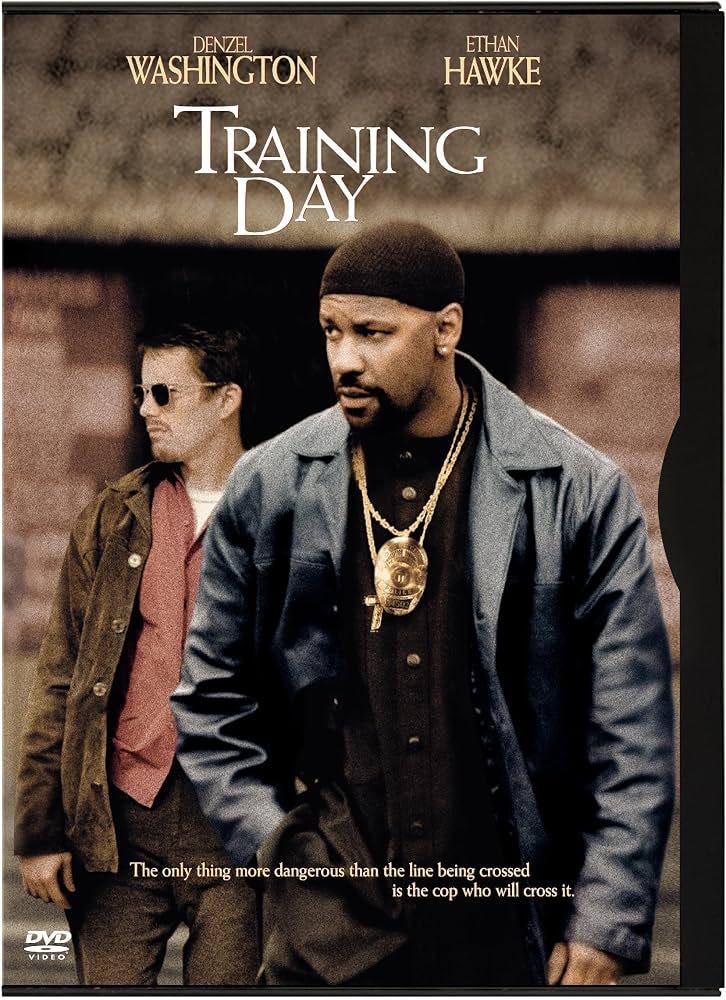
I think about that line more than I should.
Picture one. A term sheet sits on the table. It’s fine. Not great, fine. Someone round the table, smart, well-meaning, with money in the business, says take it. Get it done. A bird in the hand.
And you sit there knowing three things they don’t. Which conversations are moving. Which ones are about to land. Which ones are stalling for reasons nobody has written down yet.
I’ve had that moment more times than I can count. Investors telling me to take a term sheet, take a deal, take what’s in front of us.
Me knowing, from inside the game, that waiting a bit longer gets better terms.
Neither of us was wrong to think what we thought.
We were looking at the same board from different chairs.
The grandmaster and the enthusiast
In August, Travis Kalanick sat down with David Senra and gave the cleanest description of this I’ve heard.
The founder, if they’re any good, is a grandmaster of chess. Playing 60 to 80 hours a week. Seeing moves other people can’t see.
The investor is a chess enthusiast. They turn up, Kalanick says, “and they check in on the chess match once every 3 months.”
He finishes with a line about not telling Michael Jordan how to dunk. And definitely not how to dribble.
Now. Kalanick has scars. Benchmark pushed him out of Uber in 2017, and he hasn’t forgotten it. You could read the whole thing as a man settling a score.
I don’t think that’s the useful reading.
The useful reading is that he’s described something every founder feels and few say out loud. And something every investor would recognise if they sat in the other chair for a week.
I’ve been the grandmaster. I’ve been the enthusiast.
This is where I have to be honest with you.
I’ve spent over a decade as a founder. Built ContentCal from nothing, sold it to Adobe, then led the integration inside one of the biggest software companies on earth. Every day at the board, 60, 70, 80 hours a week.
I’ve also backed 60+ companies as an angel.
Which means I’ve been the one checking in once a quarter. Reading the update. Forming a view from a deck and a phone call.
I’ve never told a founder how to dunk from that chair. But I know exactly how little you can see from it. An update tells you what happened. It almost never tells you what nearly happened, what’s about to happen, or what the founder is quietly worried about at 2am.
So this isn’t a post about good founders and bad investors.
It’s a post about seats.
What you can see from each one. And what you can’t.
The board pack is a photograph
Here’s the first thing the enthusiast misses.
A board pack is one frame. A snapshot of the position on a Tuesday.
The grandmaster watched the whole film. They know the 40 moves that built this position. Why that knight is sitting somewhere odd. Why that pawn got pushed early. Which piece looks loose but is holding the whole thing together.
From the outside, half the board looks wrong.
From the inside, it’s the only position that could have survived the last six months.
The enthusiast reads the position. The grandmaster remembers how it got there.
Hindsight has no clock
In real chess, there’s a clock.
Every move costs time. You can’t undo it. You can’t ask for a week to think.
Founders play on that clock every single day. Payroll is a clock. Runway is a clock. A customer’s budget cycle is a clock.
The enthusiast gets to play without one. They can analyse the game after it’s happened, at their leisure, with all the information that wasn’t available when the move was made.
That’s where the “take the deal” advice comes from.
Enterprise is the best example I know. Customer deals always take longer than you’d like. Always. And only you and your exec team know where the negotiation points sit, and roughly when they’ll land.
We had one where terms were on the table. Investors thought we should take what was in front of us.
We waited six more weeks.
We knew that customer inside out. We knew the internal process they had to go through, every sign-off, every committee, and we knew they had no choice but to go through it. So we held.
Six weeks later, we signed with a bigger contract value and a longer term.
The board saw six weeks of risk. We saw a process with a known ending.
Kalanick has his own version. In 2014, his lead investor told him to take the first term sheet he got. He ran a proper process instead. Two months later, he closed at a valuation nearly three times what the first offer implied.
The enthusiast sees the risk of waiting. The grandmaster can see the cost of settling.
Sacrifices look like blunders from the gallery
Every good chess player gives up pieces.
A bishop for position. A rook for tempo. Sometimes your queen, if it wins the game.
From the gallery, it looks like you’re losing material.
In business, the sacrifice is often the deal you don’t do, or the term you give away to protect three others. The hardest version is the multi-party deal. Existing investors, new investors, customers, the team. Everyone wants something.
And the trap is trying to land a deal that pleases everybody.
It doesn’t exist. It’s close to impossible. Something has to give, and whatever gives will look like a loss to whoever was watching that particular piece.
You can’t play to the gallery and win the game.
You only learn the board by playing it
Kalanick’s number is 60 to 80 hours a week.
That’s not a badge of honour. It’s a description of how pattern memory forms.
Grandmasters don’t calculate everything. They recognise. They’ve seen this shape before, in a thousand games, and they know where it leads without working it out.
You can’t get that from watching. You can’t get it from reading the post-match analysis. You get it from sitting at the board until the patterns burn in.
That’s not a criticism of anyone who isn’t there. It’s just how it works.
Grandmasters live in ugly positions
Enthusiasts love a winning position. Clean board, material up, obvious next move.
Founders spend almost no time there.
Most of the job is cramped, awkward, losing positions. The ones where every move looks bad and you have to find the least bad one, then do it again tomorrow.
In 2019 I pitched around 40 London funds for ContentCal. 39 said no. Fuel Ventures said yes. You’re looking for a market of one.
That’s an ugly position.
I’ve been in many where I thought I’d lost ground. Some where I thought I’d lost, full stop. And I ground my way out.
Here’s what I’ve learned about fundraises and financial processes in particular. Once something’s been agreed in principle, there’s usually a way to get it done.
The only way out is through.
And “through” means hardcore groundwork and many, many phone calls.
Playing two boards at once
Now make it harder.
You’re raising a round. You’re still burning cash. And you’re running the company.
So you’re playing the immediate board: the things in front of the business this week, this month, the next three to six months. Customers, team, product, cash.
And you’re playing a second board at the same time: complex terms with your existing investors, new money coming in, preferences, structures, who gets what.
Every move on one board changes the position on the other.
That’s the ultimate game of chess. Two boards, one clock, no undo.
The enthusiast tends to see one of those boards. Usually the second one. Usually from their own side of it.
Twenty moves ahead
People say good chess players see a few moves ahead.
The best entrepreneurs I’ve ever worked with see around corners. Twenty moves out. Sometimes further.
That’s how my brain works. I can see where a deal is going long before it gets there, where a market is heading, where a relationship will end up.
And frankly, I’m usually right.
Usually.
We once had an indicative term sheet from an investor. I was confident it was going to happen. I’d played it forward in my head, I could see the close, I could see what came after the close.
It got pulled.
It didn’t happen, and it was very, very frustrating.
Indicative means indicative. I knew that. I’d just played so far ahead that I’d started treating move 15 like it had already happened, while the investor was still deciding on move two.
Seeing twenty moves ahead is a superpower right up until the other player makes a move you didn’t plan for.
Different stakes on the same board
Investors are playing a different game.
A fund has its own timeline. Its own partners to answer to. Its own portfolio maths, where one company sits alongside 30 others and the question is what the whole book returns. Their risk tolerance is different from yours. It has to be.
An entrepreneur’s risk tolerance is generally a bit higher. You’ve got more detail, more context, more feel for what’s coming. So waiting a little longer for better terms makes sense from your chair.
From theirs, taking what’s in front of you might be the right call for the fund.
There’s nothing wrong with either perspective. It’s a different view on the board entirely.
And when investors play their board well, they’re brilliant.
Over the years, mine have helped me negotiate more value into deals than I’d have got on my own. They’ve connected me to people I’d never have reached otherwise. They’ve helped me find talent.
The biggest thing an investor can do is pick up the phone and introduce you to the right person at the right moment. Someone who knows what running a company feels like. Someone who’s sat at a board like yours.
Kalanick reckons 1% of investors help. I’d put it higher than that, but I know what he means. The ones who help most rarely tell you which piece to move.
Ex-founders have sat at the board
There’s a caveat in all this, and it matters.
Some investors have been grandmasters. They’ve built companies, sat at the board 80 hours a week, played the ugly positions.
You can feel the difference in a board meeting. They read the position faster. They ask better questions. They know what a sacrifice looks like because they’ve made them.
But even they go rusty.
The day you stop playing every day is the day the patterns start to fade. Slowly. A few years on, you’re reading the game the way you remember it, which isn’t quite the way it’s being played now.
That’s not a knock. It happens to everyone who leaves the board. It’ll happen to me.
Decide which seat you’re in
So here’s where I’ve landed.
You can be a grandmaster. You can be an enthusiast. You can be great at both.
The mistake is confusing the two.
When you’re the enthusiast, you’re there to ask questions, open doors and bring the pattern you’ve seen across 50 other boards. Leave the dunking to Jordan.
When you’re the grandmaster, take the input. Listen to the view from the other chair, because sometimes it sees something you’re too close to see. Then own the move. It’s your board, your clock, your game.
And if you’re both, as plenty of us are now, know which chair you’re sitting in before you open your mouth.
Back to Alonzo.
He spends the whole of Training Day telling Jake it’s chess. He thinks he’s the grandmaster. He’s twenty moves ahead of everyone in the film.
And he loses.
To the rookie he never took seriously.
So yes. This shit’s chess.
Just remember the person across the board might be playing it too.